

Face Masks: How to Pick the Right Format, Frequency and Leave-On Time
-
Doctor Babor Cryo-Plumping Hydration Mask
Regular price 20.00$Sale price 20.00$ Regular priceUnit price perEarn 200 points -
Payot Nue Intense Peeling Mask
Regular price 62.50$Sale price 62.50$ Regular priceUnit price perEarn 620 points -
 Sold out
Aquafolia AquaUNDE Mask
Regular price 136.00$Sale price 136.00$ Regular priceUnit price perEarn 1360 pointsSold out -
Luzern La Nuit Hydra Enzyme Mask
Regular price From 81.00$Sale price From 81.00$ Regular priceUnit price perEarn 810 points -
TOI BEAUTY Eye Masks
Regular price 18.00$Sale price 18.00$ Regular priceUnit price perEarn 180 points -
Valmont Prime Renewing Pack Anti-Stress Fatigue Mask
Regular price From 95.00$Sale price From 95.00$ Regular priceUnit price perEarn 950 points -
Babor Hsr Lifting Night Mask
Regular price 120.00$ Regular price150.00$Sale price 120.00$ Regular priceUnit price per150.00$Earn 1200 pointsSale -
Image Skincare Clear Cell Clarifying Salicylic Mask
Regular price 76.00$Sale price 76.00$ Regular priceUnit price perEarn 760 points -
Is Clinical Tri-Active Exfoliating Mask
Regular price 137.00$Sale price 137.00$ Regular priceUnit price perEarn 1370 points -
Jan Marini Retinol Plus Mask
Regular price 148.00$Sale price 148.00$ Regular priceUnit price perEarn 1480 points -
YON-KA Age Defense Hydra No. 1 Mask
Regular price 102.00$Sale price 102.00$ Regular priceUnit price perEarn 1020 points -
GM COLLIN Biocellulose Facial Mask
Regular price 125.00$Sale price 125.00$ Regular priceUnit price perEarn 1250 points -
GM COLLIN Glow Mask
Regular price 58.00$Sale price 58.00$ Regular priceUnit price perEarn 580 points -
Payot Source Rehydrating Balm Mask
Regular price 65.00$Sale price 65.00$ Regular priceUnit price perEarn 650 points -
Payot Crème N2 Gentle Peel-Off Mask
Regular price 12.00$ Regular price20.00$Sale price 12.00$ Regular priceUnit price per20.00$Earn 120 pointsSale -

 FAVOURITE ♡ Favorite
Payot My Payot Sleeping Radiance Mask
Regular price 60.00$Sale price 60.00$ Regular priceUnit price perEarn 600 pointsFAVOURITE ♡ Favorite -
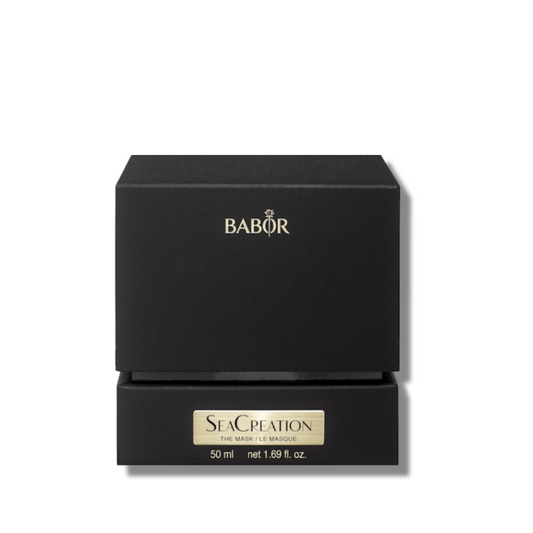
Babor SeaCreation The Mask
Regular price 300.00$ Regular price375.00$Sale price 300.00$ Regular priceUnit price per375.00$Earn 3000 pointsSale -
Esthederm Osmoclean Clarifying Gum Mask
Regular price 53.00$Sale price 53.00$ Regular priceUnit price perEarn 530 points -
Jan Marini Luminate Mask
Regular price 148.00$Sale price 148.00$ Regular priceUnit price perEarn 1480 points -
Jan Marini Skin Zyme Mask
Regular price 128.00$Sale price 128.00$ Regular priceUnit price perEarn 1280 points -
Vivier Ultra-Hydrating Mask
Regular price 90.00$Sale price 90.00$ Regular priceUnit price perEarn 900 points -
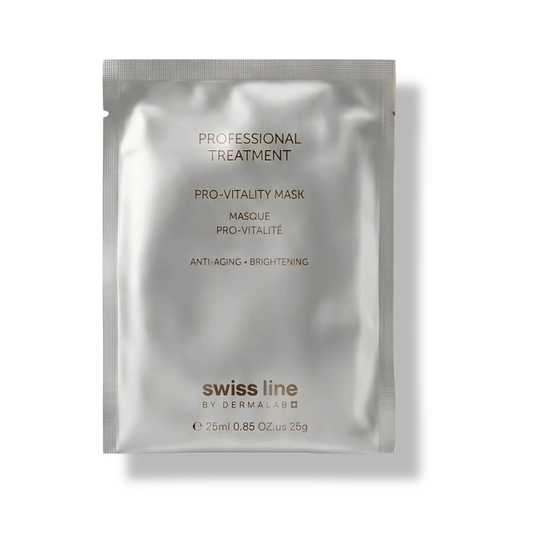
Swiss Line Cell Shock Pro-Vitality Masks
Regular price From 50.00$Sale price From 50.00$ Regular priceUnit price perEarn 500 pointsNew -
Swiss Line Cell Shock Facial Repair Mask
Regular price From 50.00$Sale price From 50.00$ Regular priceUnit price perEarn 500 pointsNew -
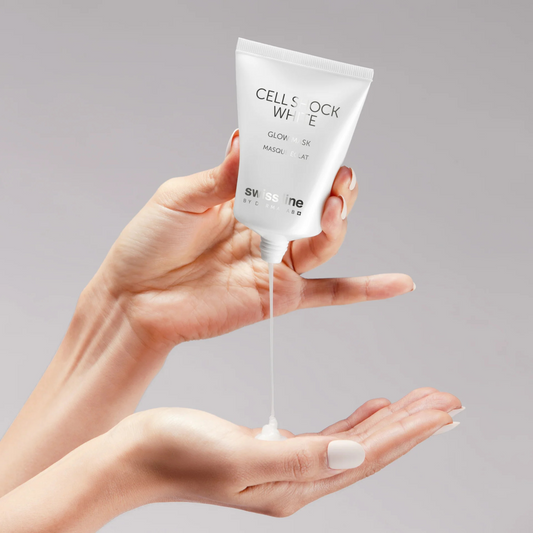
Swiss Line Cell Shock White Brightening Mask
Regular price 237.00$Sale price 237.00$ Regular priceUnit price perEarn 2370 pointsNew











A face mask is not a moisturizer you leave on longer. It is a short, concentrated treatment, built to work in ten to twenty minutes on clean skin, and then to come off. The whole point is that brevity: the active dose is higher than in a daily product, which is exactly why you don't use one every day.
This collection brings together 73 facial masks from the professional lines we use in the treatment room at Spa Infinima, our esthetics centre in the Quebec City region. It sits alongside the other steps: cleansers and makeup removers, toners, serums, ampoules, moisturizers, scrubs and exfoliants, eye care, lip care and sun protection, all of it in the facial skincare collection.
Learn more about face masks
Six Mask Formats, and What Each One Actually Does
Format decides how a mask works on skin: by occlusion, by absorption, or by diffusion. Sort by that first, before you think about the goal.
| Format | How it works | Leave-on time | Best for |
|---|---|---|---|
| Cream mask | Gentle occlusion: slows water loss | 10–15 min | Dry, uncomfortable skin |
| Clay mask | Absorption: binds sebum as it sets | 5–10 min, never to cracking | Oily skin, shiny T-zone |
| Sheet mask | Diffusion: holds serum against skin | 15–20 min | Dehydrated skin, a quick glow |
| Gel mask | Cool, non-greasy texture | 10–15 min | Sensitive, overheated skin |
| Peel-off mask | A film you lift off in one piece | 15–20 min | Uneven skin texture |
| Overnight mask | No rinse: replaces your night cream | All night | Dull, tired skin |
The Sheet Mask Is a Standby, Not a Staple
A sheet mask is a cellulose, biocellulose or hydrogel carrier soaked in a single dose of serum. Its advantage is mechanical: the sheet stops the formula evaporating and keeps it against the skin for twenty minutes, which no spreadable texture manages as well. We carry a handful, including a calming vitamin B sheet mask from Babor, a hydrating hydrogel from Image Skincare and biocellulose masks from G.M. Collin. The drawback is cost: one dose, one wrapper. A standby format, not the base of a routine.
The sheet doesn't make the formula better. It just stops it drying out before it has worked.
Collagen Masks: What We Actually Carry
The collagen mask is heavily searched, and it deserves a straight answer rather than a page that implies a whole range.
Our collagen offering is narrow and named: the CellCollagen line from Cellcosmet, with a smoothing mask for face and neck and a cellular mask for the eye contour. Outside those two, the firming masks in this collection work through peptides, cellular extracts or tightening complexes: not through added collagen.
The distinction matters. Collagen applied to the surface does not replace the skin's own: the molecule is too large to cross the stratum corneum. What it does well is hold water and leave a supple film that smooths the look of fine lines for a few hours. The tightening formulas from Swiss Line, Valmont and Payot aim at the same visible result by other routes.
If you want firmness over time rather than a one-evening effect, the mature skin collection and a daily serum do the real work: the mask punctuates it.
Pick by Goal: Hydrate, Purify, Brighten
Once format is settled, the goal decides which face mask belongs in your cupboard. Three answers cover most needs.
Hydrating Masks Are for Tight Skin, Not Oily Skin
A hydrating mask delivers water plus agents that hold it: hyaluronic acid, glycerin, aloe vera. It is for dehydrated skin, a temporary state that hits dry skin and oily skin alike after a Quebec winter.
The tell: if skin feels tight after cleansing and dehydration lines show through makeup, you want a hydrating mask, not a richer nourishing one. One replaces water, the other replaces lipids.
Clay Masks Purify Without Stripping
A clay mask (kaolin, green clay, sometimes charcoal) absorbs excess sebum and tightens the look of visible pores. It suits combination skin and acne-prone skin.
The classic mistake is letting it dry until it cracks. Past that point clay stops binding anything: it pulls water out of the skin and leaves a tightness people then mistake for a need to hydrate. Rinse with lukewarm water as soon as the mask goes matte. Our Vivier ultra purifying clay mask and the kaolin-and-propolis mask from Esthederm are typical of the family.
Brightening Masks Work on the Surface, and That's Fine
A brightening mask works on skin texture and how it reflects light. The formulas pair enzymes or mild acids, which loosen surface buildup, with antioxidants such as vitamin C or niacinamide that revive a dull complexion. This is the night-before-an-event mask.
The benefit is real but short. For pigmented skin and lasting work on an even skin tone, a daily serum is still the main tool; our article on how to bring vitamin C, hyaluronic acid and niacinamide into your routine covers the pairings.
Torn Between Two Masks?
Tell us what your skin does and we'll tell you which format suits it. A badly chosen mask does no damage, but it does nothing either, and that's one slot in your routine sitting empty for six months.
Where a Mask Belongs in Your Routine, and for How Long
This is where results are won or lost: the right mask in the wrong place does nothing.
Its Slot Is Right After Cleansing
A mask goes on clean, dry skin, after your cleanser and before your toner. Applied over a moisturizer, it cannot cross the film left on the surface and its actives simply sit on top. It occupies the same slot as an exfoliant: immediately after cleansing, before anything else touches the skin.
A mask and a scrub on the same evening, though, is one treatment too many for the skin barrier. Alternate.
Leave-On Time, and What Happens If You Overshoot
Ten to twenty minutes, depending on format. Going longer improves nothing and can set you back: a clay mask left too long dehydrates, a sheet mask left to dry takes back the water it just delivered, and a mild-acid mask left on invites redness on sensitive skin. Overnight masks are the exception: formulated without rinsing, they replace your evening product.
After rinsing, carry on with your usual serum and moisturizer: skin has just been made more receptive.
How Often: One to Three Times a Week
One face mask a week is enough for normal or sensitive skin. Two to three for oily or dehydrated skin, alternating mask types. Beyond that the returns reverse: skin has no time to rebuild its protective film.
In the treatment room our estheticians apply a mask at every facial, every four to six weeks. At home it is your daily products that carry the results; the mask speeds them up, it doesn't replace them.
Multi-Masking: Two Masks on One Face
A face doesn't have one single need. On combination skin the T-zone makes sebum while the cheeks are short of water: one face mask everywhere treats half the face correctly and makes the other half worse.
The in-spa move is to apply a clay mask to the forehead, nose and chin and a hydrating mask to the cheeks, at the same time. Rinse the clay first, then the rest two to five minutes later. Men gain just as much, since men's skin is often oilier down the centre; early-wrinkle skin can reserve a tightening mask for the forehead.
Two textures, one quarter of an hour: the only honest answer to a face that isn't uniform.
Free Shipping Over $75 Across Canada
Two complementary masks often cost less than one badly chosen treatment. Every order also earns $20 toward a treatment at Spa Infinima, and our gift sets already bundle several steps of one line.
The Mask Brands We Use in the Treatment Room
We only sell the professional products we use in-spa, and that applies to every face mask on this page, which is why some very visible brands are missing here.
Swiss high-end skincare (Valmont, Swiss Line, Cellcosmet) works with cellular extracts and tightening complexes. Treatment-room care comes from Babor, Payot, Yon-Ka and Quebec maker G.M. Collin; the biomimetic and marine approaches come from Esthederm and Phytomer. For skin already used to strong actives, iS Clinical, Jan Marini, Vivier and Image Skincare offer masks with salicylic acid, retinol or enzymes. Past the face, the body collection takes over.
Frequently Asked Questions About Face Masks
How often should you use a face mask?
Once a week for normal or sensitive skin, two to three times for oily or dehydrated skin. Beyond that, skin no longer has time to rebuild its protective film between treatments and the returns reverse. Alternating two different masks across the week beats repeating the same one three times.
Should a mask go on before or after moisturizer?
Before, always. A mask goes on clean, dry skin, right after the cleanser and before the toner. Applied over a moisturizer, it cannot cross the film left on the surface and its actives never reach the skin. After rinsing, pick the routine back up: serum, then moisturizer.
What happens if you leave a mask on too long?
Nothing good, and it depends on the format. A clay mask dried to cracking stops absorbing sebum and pulls water out of the skin instead. A sheet mask left until dry takes back the water it just delivered. A mild-acid mask left on can cause redness on sensitive skin. Ten to twenty minutes is enough, except for overnight masks, which are formulated without rinsing.
Can you use two different masks at once?
Yes. That is multi-masking, a routine move in the treatment room. Apply a clay mask to the T-zone, meaning forehead, nose and chin, and a hydrating mask to the cheeks. Rinse the clay first, since its leave-on time is shortest, then the second two to five minutes later. It is the most accurate answer for combination skin, whose needs differ from one zone to the next.
