

Eye Care for Skin Four Times Thinner Than the Rest of Your Face
-
Aquafolia Complete Eye Contour Cream
Regular price 66.00$Sale price 66.00$ Regular priceUnit price perEarn 660 points -
Doctor Babor Microbiomic Eye Cream
Regular price 55.00$Sale price 55.00$ Regular priceUnit price perEarn 550 points -
Doctor Babor Pro Tone Correcting Eye Cream
Regular price 130.00$Sale price 130.00$ Regular priceUnit price perEarn 1300 points -
Swiss Line Cell Shock Age Intelligence Gentle Face and Eye Cleanser
Regular price 119.00$Sale price 119.00$ Regular priceUnit price perEarn 1190 points -
GM COLLIN Instant Radiance Eye Patches
Regular price 56.00$Sale price 56.00$ Regular priceUnit price perEarn 560 points -
Doctor Babor Pro Retinol Eye Cream
Regular price 36.00$ Regular price60.00$Sale price 36.00$ Regular priceUnit price per60.00$Earn 360 pointsSale -
Swiss Line Cell Shock Eye Care Ritual Set
Regular price 278.00$ Regular price484.00$Sale price 278.00$ Regular priceUnit price per484.00$Earn 2780 pointsSale -
Aquafolia AquaIMUNITA Cell Biotech Probio Eye Serum
Regular price 120.00$Sale price 120.00$ Regular priceUnit price perEarn 1200 points -
Esthederm Intensive Hyaluronic + Eye Contour Serum
Regular price 78.00$Sale price 78.00$ Regular priceUnit price perEarn 780 points -
Esthederm Osmoclean Waterproof Eye and Lip Make-up Remover
Regular price 42.00$Sale price 42.00$ Regular priceUnit price perEarn 420 points -
Swiss Line Water Shock Bi-Phase Eye and Lip Makeup Remover
Regular price 83.00$Sale price 83.00$ Regular priceUnit price perEarn 830 points -
TOI BEAUTY Eye Masks
Regular price 18.00$Sale price 18.00$ Regular priceUnit price perEarn 180 points -
Esthederm Intensive Retinol Eye Contour Lift Balm
Regular price 78.00$Sale price 78.00$ Regular priceUnit price perEarn 780 points -
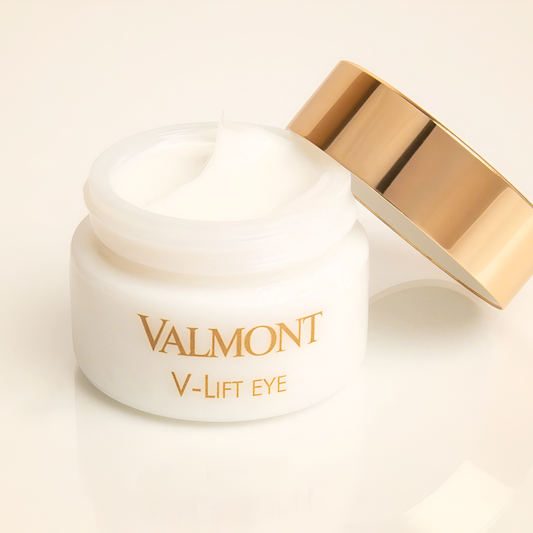
Valmont V-Lift Eye Anti-Wrinkle Eye Contour
Regular price 365.00$Sale price 365.00$ Regular priceUnit price perEarn 3650 points -
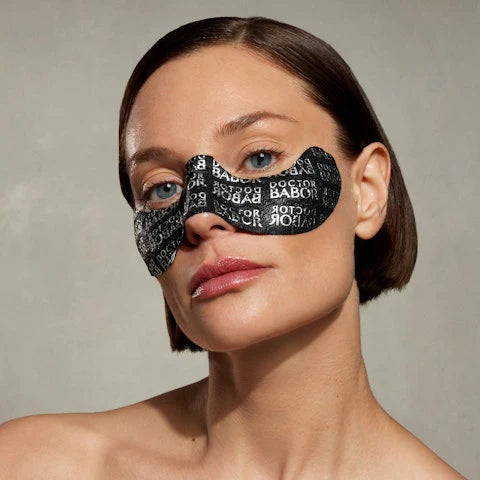
Doctor Babor Resurface Regenerating Eye Patch
Regular price 56.00$ Regular price70.00$Sale price 56.00$ Regular priceUnit price per70.00$Earn 560 pointsSale -
Payot Nue Gentle Tonic Mist for Face and Eyes
Regular price 42.50$Sale price 42.50$ Regular priceUnit price perEarn 420 points -
Payot Nue Bi-Phase Eye and Lip Makeup Remover
Regular price 43.50$Sale price 43.50$ Regular priceUnit price perEarn 430 points -
Payot Nue Micellar Makeup Remover Water for Face and Eyes
Regular price From 23.60$ Regular price29.50$Sale price From 23.60$ Regular priceUnit price per29.50$Earn 230 pointsSale -
Esthederm Lift & Repair Eye Contour Lift Patches
Regular price 92.00$Sale price 92.00$ Regular priceUnit price perEarn 920 points -
Esthederm Lift & Repair Smoothing Eye Contour Treatment
Regular price 99.00$Sale price 99.00$ Regular priceUnit price perEarn 990 points -
Jack Black Refreshing Anti-Puffiness Gel Eye Balm
Regular price 35.00$Sale price 35.00$ Regular priceUnit price perEarn 350 points -
Jan Marini Transformation Eye Cream
Regular price 126.00$Sale price 126.00$ Regular priceUnit price perEarn 1260 points -
Luzern La Nuit Ultimate Eye Balm
Regular price 256.00$ Regular price320.00$Sale price 256.00$ Regular priceUnit price per320.00$Earn 2560 pointsSale -
Luzern Absolute Luminous Eye Serum 10 ml
Regular price 164.00$Sale price 164.00$ Regular priceUnit price perEarn 1640 points





The skin around the eyes is roughly four times thinner than the skin on the rest of the face. It has almost no sebaceous glands, so no natural protective film, and it absorbs some ten thousand blinks a day. It is the one area where an ordinary day cream is both too rich and in the wrong place.
This collection brings together the eye care products our estheticians use in the treatment room at Spa Infinima, our institute in the Quebec City area: creams, gels, serums, balms, masks and patches formulated for that skin specifically. It sits inside our wider facial skincare range, alongside cleansers and makeup removers, toners, serums, ampoules, moisturizers, masks, scrubs and exfoliants, lip care and sun protection.
Learn more about eye care
Why the Eye Contour Needs Its Own Formula
The skin around the eyes has three anatomical quirks, and between them they explain almost everything you see in the mirror.
Thinness first: under 0.5 mm, against roughly 2 mm on the cheek. Blood vessels show through, and the slightest dehydration reads as fine lines. Then the absence of sebaceous glands: the area produces no sebum, so it holds water poorly and dries out faster than the rest of the face. Mobility last: the orbicularis muscle never stops working, which marks the skin along the crow's feet long before wrinkles appear anywhere else.
The practical consequence is that a texture designed for the cheek is often too occlusive here, and an active dosed for the face becomes too concentrated. This is a formulation constraint, not a sales argument: professional laboratories lighten the emulsions and calibrate the fragrance specifically for this zone.
An eye cream is not a face cream in a smaller jar. It is a different formula that happens to come in a smaller jar.
Dark Circles and Puffiness Are Two Different Problems
This is the most common confusion we see in the treatment room, and an expensive one: an eye treatment chosen for the wrong cause does nothing, and a makeup concealer only fixes the look of the moment.
The Three Kinds of Dark Circles
Pigmented dark circles are brown and even. They come from excess melanin, common on pigmented skin, and they deepen with sun exposure. Products that work on radiance and pigmentation (vitamin C, niacinamide) are the relevant ones here, and daily sun protection makes a real difference.
Vascular dark circles are blue or purple. They signal slowed microcirculation: blood pools in the capillaries and shows through the skin. This is the dark circle of short nights, stress and long screen days. Caffeine, vitamin K and vein-toning extracts work on that terrain.
Hollow dark circles are about volume, not colour: lost density under the orbital bone casts a shadow. A cosmetic product can hydrate and plump the surface with hyaluronic acid, but it does not fill a hollow: that is the honest limit of cosmetics.
Water Retention or Fat Pad: Two Kinds of Puffiness
Water-retention puffiness swells overnight, settles through the day, and worsens after a salty or late evening. It is fluid. A cool eye gel, a metal applicator and a draining massage all improve it visibly.
Fat-pad puffiness is there from morning to night and does not shift. It corresponds to a herniation of the orbital fat pad. No skincare product removes it: saying so is a matter of seriousness, not modesty. Firming the skin that covers it does soften the shadow it casts.
Not Sure What Is Causing Your Dark Circles?
An esthetician reads the area in two minutes. Finger pressure separates a vascular dark circle from a pigmented one, and the diagnosis points to the right texture rather than the most expensive jar. Every order earns you $20 toward a treatment.
Eye Cream, Eye Gel, Serum or Patch: Matching Texture to Need
The four formats of eye care products gathered here are not interchangeable. Choose on texture first, active second.
| Format | What it does | Who it suits |
|---|---|---|
| Eye gel | Cool, water-light, fast-absorbing, decongesting | Water-retention puffiness, younger skin, combination to oily skin, summer |
| Eye cream | Rich, nourishing, lasting comfort, works on fine lines | Dryness, dry skin, settled fine lines, mature skin, winter |
| Eye serum | Fluid concentrate, layered under the cream or used alone | Targeted course, marked dark circles, dehydrated skin |
| Eye mask and eye patches | Intensive dose over 10 to 20 minutes, immediate effect | Before an event, tired eyes, a one-off brightening boost |
The gel is often the right first product: it does not migrate and suits sensitive skin as well as men's skin. The cream takes over when the area feels tight, or at night. Plenty of our clients alternate: gel in the morning, cream overnight.
The Actives Worth Reading on an Eye Care Label
Four families of actives run through professional formulas, and a fifth calls for caution.
Caffeine constricts the vessels temporarily and de-puffs the eye area: it is the reference active in anti-puffiness gels. Peptides support firmness and density. Hyaluronic acid holds water and smooths the look of dehydration lines. Vitamin K and vein-toning extracts target the vascular dark circle, while vitamin C works on radiance and the pigmented one.
That leaves retinol. It acts on fine lines around the eyes, and several professional houses make a version dosed for the eye contour, but on skin four times thinner, a face retinol is almost always too strong. Choose a formula built for the area, start two nights a week, stay off the mobile eyelid and the lash line, and reinforce your sun protection in the morning. Our article on fitting vitamin C, hyaluronic acid and niacinamide into a routine covers which pairings hold up.
How to Apply Eye Care Without Dragging the Skin
Technique matters as much as the formula: the skin of the eye area stretches when you pull on it.
Take a rice-grain amount for both eyes. Place three or four dots on the orbital bone, never on the mobile eyelid, where the product would migrate into the eye. Press it in by tapping with the ring finger, the weakest finger on the hand, working from the inner corner outward. For puffiness, finish with a light sweep toward the temple to support lymphatic drainage.
The order in the routine is fixed: after cleansing and toner, after your face serum, before your moisturizer. Morning and night. Metal applicators, cool to the touch, add an immediate decongesting effect: a tube kept in the fridge does the same job.
Judge an eye cream over six to eight weeks, not three mornings.
Free Shipping Over $75 Across Canada
Our advisors recommend two products, not twelve. Describe what you see (dark circles, puffiness, fine lines, dryness) and we will point you to the texture that matches. Our gift sets often pair an eye treatment with a serum from the same line.
The Professional Eye Care Brands We Use at Spa Infinima
We only stock eye contour creams from the professional lines our estheticians work with in the treatment room: creams, gels, balms and eye serums.
Swiss high-end skincare (Valmont, Swiss Line, Cellcosmet) works with cellular complexes and lifting textures. Institute anti-aging comes from Babor, Payot, Yon-Ka and Quebec manufacturer G.M. Collin, whose eye contour range is built around peptides and hyaluronic acid. Esthederm and Phytomer bring biomimetic and marine approaches. On the medical-aesthetic side, where the most concentrated under-eye creams sit: iS Clinical, Jan Marini, Vivier, Luzern and Image Skincare. Jack Black and Aquafolia round out the gel side. The rest of the routine continues in our first wrinkles and body care collections.
Frequently Asked Questions About Eye Care
At what age should you start using an eye cream?
There is no regulation age, there is a signal: the day a fine line stays visible on well-hydrated skin. For most people that falls between 25 and 30. Before then, a light eye gel is enough if your eyes look marked on waking. Starting early with a light texture beats starting late with a rich cream.
Can you use your face cream around the eyes?
Technically yes, but it is not ideal. A face cream is formulated for skin roughly four times thicker, with active concentrations and fragrances that suit this zone poorly. Two concrete risks: a texture too occlusive for the eyelid, and actives such as retinol or exfoliating acids that turn irritating here. If you can only buy one product, apply your face cream up to the orbital bone and no closer.
Does an eye cream make dark circles disappear?
No, and no serious brand claims it does. A cosmetic product softens the look of dark circles: it hydrates, supports microcirculation and revives radiance, which makes the circle less visible. How much you get depends on the type: a vascular circle responds well to caffeine and vitamin K, a pigmented one to vitamin C and sun protection, a hollow one barely at all, since it is a loss of volume.
Eye gel or eye cream: which one should you choose?
The gel is cool, fluid and decongesting: it suits water-retention puffiness, younger skin and combination to oily skin. The cream is richer: it suits dryness, settled fine lines and mature skin. If your eyes puff up in the morning but feel tight at night, alternating gel in the morning and cream overnight settles the question.
